

Why Structured AI Learning Is Making a Comeback in 2026
Introduction
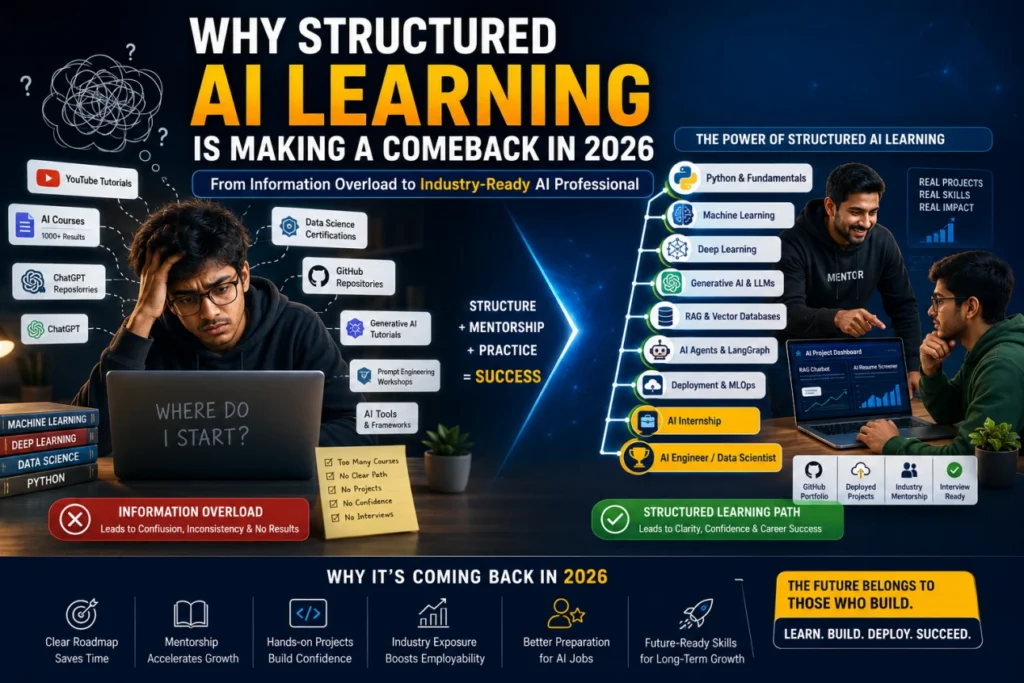
The internet has made learning Artificial Intelligence, Machine Learning, Data Science, and Generative AI easier than ever before. Students today have access to thousands of courses, YouTube tutorials, GitHub repositories, and AI certifications.
Yet despite having unlimited access to information, many aspiring AI Engineers and Data Scientists struggle to secure internships, placements, and industry-ready skills.
In 2026, companies are no longer hiring candidates based on how many courses they complete. They are hiring professionals who can build, deploy, and solve real-world problems using AI.
This shift is one of the biggest reasons structured AI learning, mentorship-driven programs, AI internships, and project-based bootcamps are making a strong comeback.
The Information Explosion Is Creating More Confusion
Students Have Too Many Resources but No Direction
Today's learners are surrounded by:
• AI Courses
• Data Science Certifications
• Generative AI Tutorials
• Machine Learning Bootcamps
• Prompt Engineering Workshops
• AI Agent Frameworks
While access to knowledge has increased, clarity has decreased.
Students often spend months consuming content without understanding which skills employers actually value.
Learning Without a Roadmap Leads to Skill Gaps
Many students jump between:
• Python
• Machine Learning
• Data Analytics
• Generative AI
• Cloud Computing
• AI Agents
without completing practical projects.
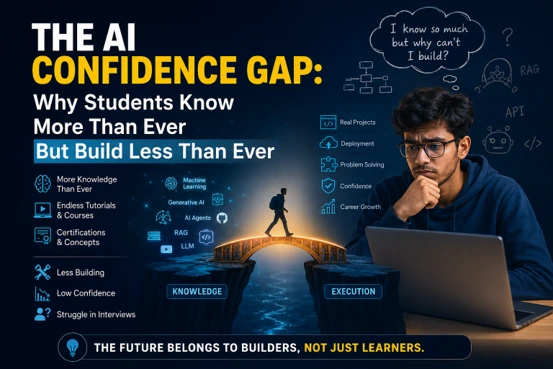
As a result, they know many concepts but struggle to build complete solutions.
Why Self-Learning Alone Is Becoming Less Effective
Modern AI Is More Complex Than Traditional Software Development
The AI ecosystem now includes:
• Generative AI
• LLM Applications
• Retrieval-Augmented Generation (RAG)
• AI Agents
• Vector Databases
• Cloud AI Infrastructure
• MLOps
Students often struggle to connect these technologies into practical workflows.
Without guidance, many remain stuck in the learning phase.
Most Learners Never Reach Real Deployment
Watching tutorials is very different from building production-ready systems.
Companies increasingly want candidates who can:
• Deploy AI Applications
• Build End-to-End Projects
• Integrate APIs
• Work With Real Datasets
• Create AI Automation Workflows
This is where many self-learners face challenges.
Why Structured AI Learning Is Growing Again
Mentorship Accelerates Career Growth
Structured programs provide:
• Clear Learning Paths
• Project Reviews
• Technical Guidance
• Career Support
• Industry Exposure
Instead of figuring everything out alone, students learn through a proven roadmap.
Accountability Creates Consistency
One of the biggest reasons students quit AI learning is inconsistency.
Structured programs create:
• Weekly Milestones
• Live Sessions
• Peer Learning
• Project Deadlines
• Practical Assessments
This helps students stay focused and complete real projects.
What Recruiters Actually Want in 2026
Skills Matter More Than Certificates
Recruiters increasingly ask:
• What Have You Built?
• Can You Deploy Applications?
• Can You Solve Business Problems?
• Can You Work With AI Tools?
A strong project portfolio often carries more weight than multiple certificates.
Industry Exposure Creates Competitive Advantage
Students who participate in:
• AI Internships
• Project-Based Bootcamps
• Mentorship Programs
• Live Industry Workshops
often develop stronger practical skills than those relying entirely on self-study.
This experience becomes valuable during placements and interviews.
Key Takeaways
• Information Is Abundant, but Direction Is Becoming Scarce.
• AI Learning Is Becoming More Complex Every Year.
• Self-Learning Works Best With Structure and Accountability.
• Recruiters Increasingly Prioritize Practical AI Skills Over Certifications.
• AI Internships and Project-Based Learning Improve Employability.
• Mentorship Helps Students Avoid Common Learning Mistakes.
• Building Real Projects Is More Valuable Than Collecting Courses.
• Structured AI Learning Is Becoming a Competitive Advantage in 2026.
Conclusion
The challenge facing students today is no longer access to knowledge.
The challenge is transforming knowledge into execution.
As Artificial Intelligence, Machine Learning, and Generative AI continue to reshape the technology industry, students who follow structured learning paths will often progress faster than those relying solely on fragmented resources.
In 2026, the most successful AI professionals will not necessarily be the ones who consume the most content.
They will be the ones who consistently build, deploy, and solve real-world problems.
Call To Action (CTA)
The AI industry is evolving faster than traditional education systems.
Students who combine structured learning, mentorship, project-based experience, and practical implementation will gain a significant advantage in internships, placements, and future AI careers.
The goal is not to learn more.
The goal is to become industry-ready.
FAQ Section
tag:
Share:
